
Foreclosure and distressed-property research should not stop when a possible deal appears. Investors still need to check rent potential, local comps, holding costs, rental demand, cash flow, resale logic, and the most realistic exit strategy. A low acquisition price does not automatically turn a property into a good investment. This article focuses on rental value research, property income checks, and exit planning tools, not financial advice or guaranteed returns. Every estimate should be tested against local data, current listings, property condition, taxes, insurance, and repair costs.
ForeclosureHub stays first because it gives users foreclosure-specific property context before they compare rental value or portfolio tools. Rentometer and RentCast help with rent estimates, local rent comps, and rental market data. Mashvisor brings a wider investment analysis angle. Stessa helps users track income, expenses, and rental performance after acquisition. This list was built around rental exit research rather than another foreclosure listing comparison.
Rental Research Tools Selected for This List
Each tool answers a different question in the rental research process. Some help with the property before the rent math starts, while others focus on comps, income checks, strategy planning, or portfolio tracking:
- ForeclosureHub: Foreclosure-specific property context, owner data, tax details, market information, and free skip tracing;
- Rentometer: Local rent estimates, rent comparison, and neighborhood-level rental checks;
- RentCast: Rent estimates, property data, rental comps, and market trend information;
- Mashvisor: Rental property analysis, investment search, cash flow estimates, and strategy comparison;
- Stessa: Rental income tracking, expense review, portfolio reporting, and property performance organization.
The goal is to compare the property from more than one side: acquisition context, rent level, market demand, income tracking, and exit planning.
1. ForeclosureHub
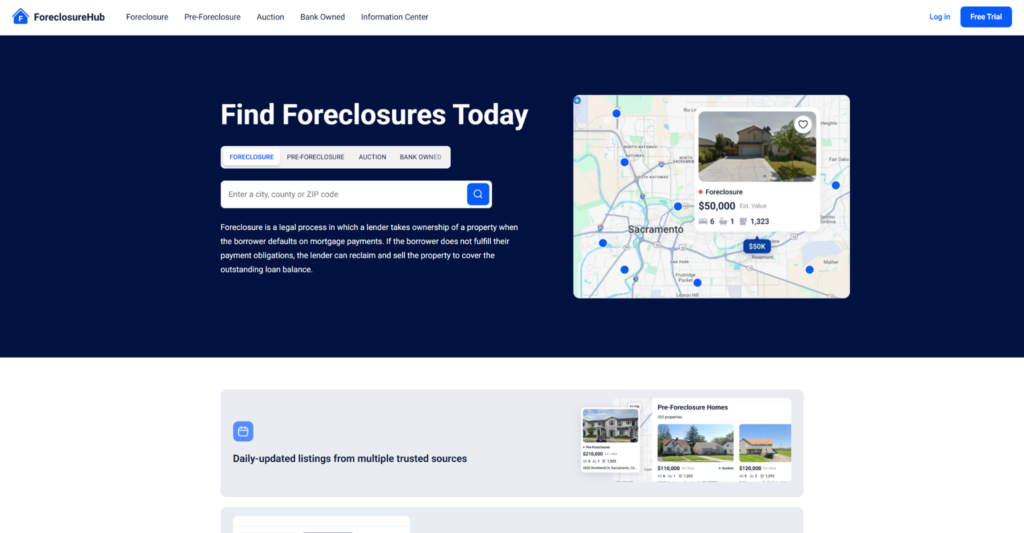
ForeclosureHub takes the first position because rental strategy research needs property context before rent numbers are trusted. Users can search pre-foreclosure, foreclosure, bank-owned, and auction listings across the United States. The ForeclosureHub rental property research tool gives users a focused way to review distressed-property data before they compare outside rental value tools. The platform provides owner details, mortgage records, tax data, transaction history, market information, and free skip tracing. Some county data may update faster than others, and there is no dedicated mobile app yet.
Best starting point
ForeclosureHub is most valuable before rental analysis begins. It helps users understand the property, ownership record, debt context, and market background first. That makes it a stronger starting layer before rent comps, rehab math, or exit planning.
ForeclosureHub should not be framed as a rent calculator. Its role is to give users property and market context before they test rental value or exit options:
- Pre-foreclosure, foreclosure, bank-owned, and auction listings;
- Free skip tracing included with every property search;
- Owner, mortgage, tax, assessment, and transaction details;
- Market data for sale, rental, and comparable property checks;
- Saved searches and email alerts for matching properties.
ForeclosureHub gives users the first research layer before they move into rent comps, cash flow checks, or portfolio tools.
2. Rentometer
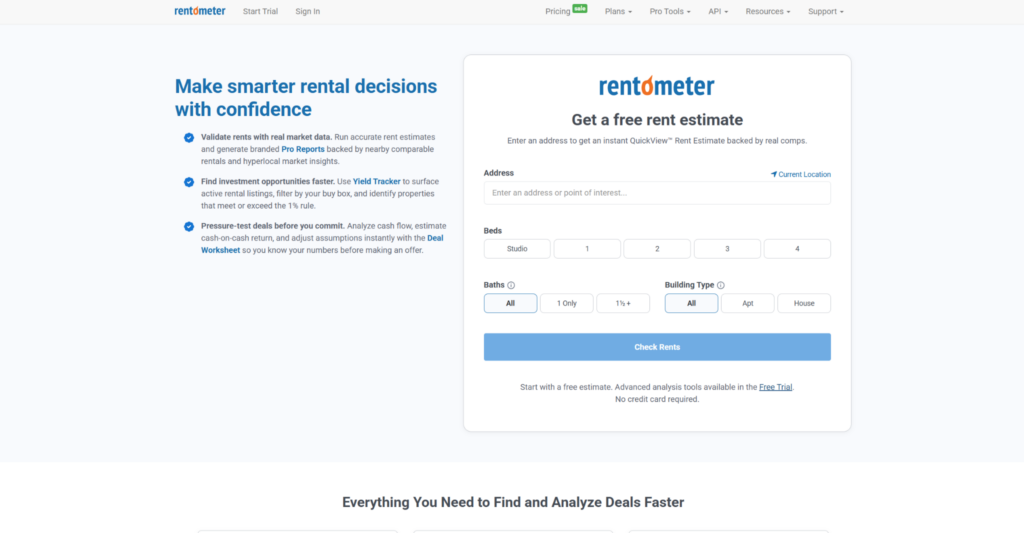
Rentometer gives the article a direct rent comparison source. Users can check rent estimates and compare a property against nearby rentals. This is practical when the main question is whether the expected rent looks realistic for the area. Rent estimates can change with condition, amenities, lease type, neighborhood details, and timing. Rentometer is better as a rent reasonableness check than as a full investment decision tool.
Rent check match
Rentometer makes the most sense when users need to compare expected rent against nearby rental data. It can help early in the screening process before deeper deal math starts. The results should still be paired with property condition checks and active local listings.
Rentometer is useful when the main question is whether the rent number makes sense. One estimate should not be treated as the final answer:
- Rent estimates by address or area;
- Nearby rental comparison;
- Neighborhood-level rent checks;
- Support for screening rental assumptions;
- Quick rent review.
Rentometer can help users challenge rent assumptions before they spend more time on a property.
3. RentCast
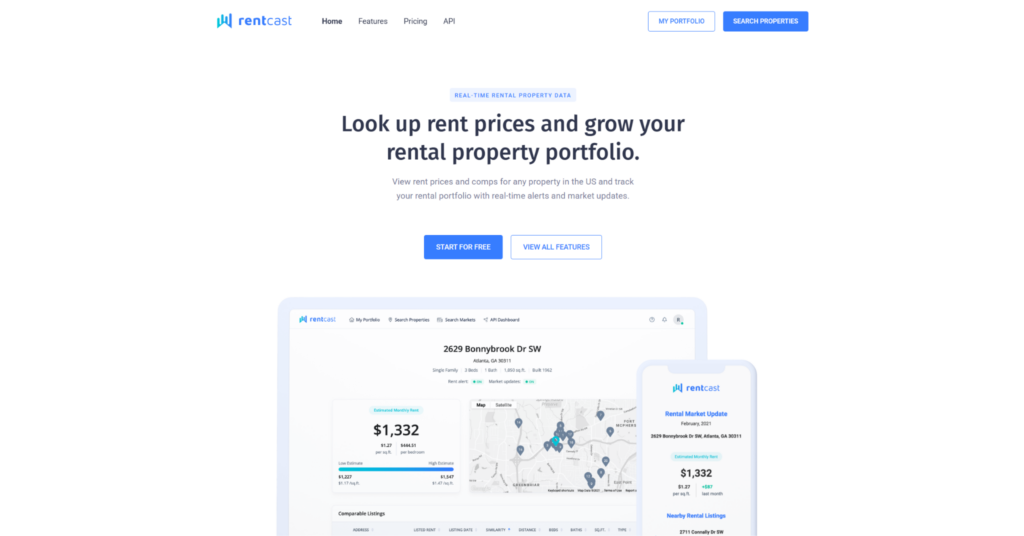
RentCast adds a rental data and market trend layer. It can support rent estimates, rental comps, property data, and market information. This gives users a more data-focused way to review rental numbers. Rent data still needs local context and property-level review before it shapes a decision. RentCast is a strong option when rental research needs to support repeated analysis across more than one property.
Data-led rental review
RentCast makes sense when users want rent estimates and market data together. It can help compare a property against local rental conditions. It is better for structured rental research than for one-off guessing.
RentCast is useful when rent comps need more structure. Active listings and property condition should still be checked before relying on the numbers:
- Rent estimates;
- Rental comps;
- Property data;
- Rental market trends;
- Support for repeatable rent analysis.
RentCast can help users organize rent research before they test cash flow or exit options.
4. Mashvisor
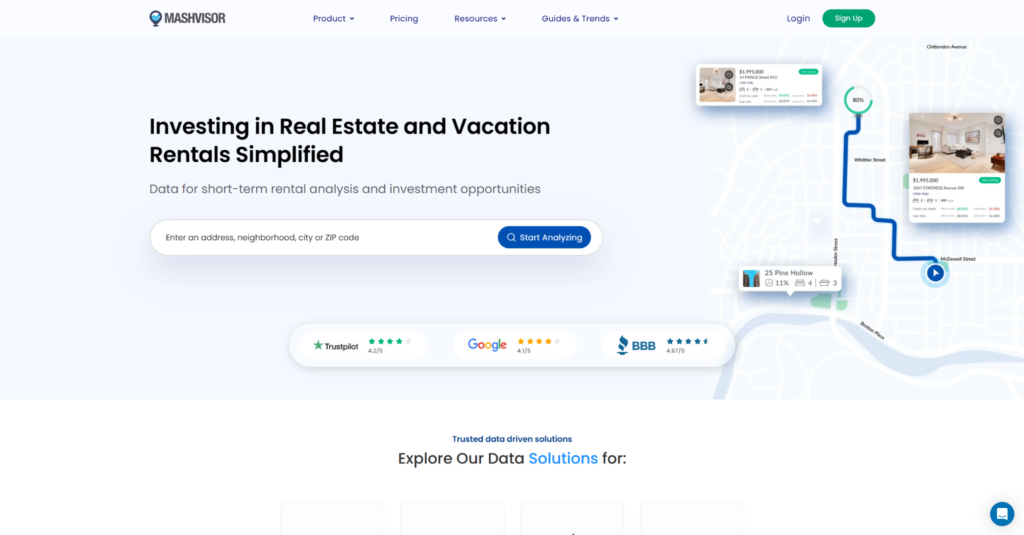
Mashvisor brings an investment analysis layer to the list. Users can compare rental strategy, cash flow, rental income, expenses, and potential returns depending on the property and market. This helps when long-term rental logic needs to be compared with other income strategies. Projected returns still depend on assumptions, financing, repairs, taxes, vacancy, and management costs. Mashvisor is most relevant when rent research needs to connect with broader investment math.
Strategy comparison pick
Mashvisor is a better match when users want a rental strategy and investment numbers in one place. It can help test whether a property has a realistic path as an income asset. The results should still be checked against real costs and local market conditions.
Mashvisor is useful when rental research needs to move beyond one rent estimate. The platform can help users think through income, expenses, and strategy selection:
- Rental property analysis;
- Cash flow and income estimates;
- Long-term rental and short-term rental comparison;
- Expense and return assumptions;
- Support for investment strategy review.
Mashvisor can help connect rental value to deal logic, but the final math still depends on real costs.
5. Stessa

Stessa gives the Top 5 a rental portfolio and performance tracking layer. It helps users organize rental income, expenses, reporting, property performance, and portfolio-level numbers. This becomes more relevant after a property is acquired or when users want to model how a rental might be tracked over time. Tracking software does not decide whether a property should be purchased. Stessa makes sense when rental research needs to connect with ongoing ownership and performance review.
Portfolio tracking choice
Stessa is the better choice when users need to track rental performance after estimates turn into real income and expenses. It can help organize the ownership side of a rental property. It is better for portfolio management than for early deal discovery.
Stessa is not mainly a rent comp tool. Its value is in tracking what happens after a property becomes part of a rental portfolio:
- Rental income tracking;
- Expense organization;
- Property performance reporting;
- Portfolio-level rental review;
- Support for ongoing ownership management.
Stessa helps keep rental performance organized after acquisition or during portfolio planning.
Final Thoughts
Rental value research should not start and end with one rent estimate. ForeclosureHub gives users the property and distressed-market context before they compare rent comps or investment tools. Rentometer and RentCast help test rental value from different data angles. Mashvisor and Stessa connect rental research to strategy and performance tracking.
Every rental estimate depends on property condition, local demand, vacancy, repairs, financing, taxes, insurance, and management costs. A foreclosure or distressed property can look attractive on paper but still fail once real expenses are included. These tools are best used together as a research workflow rather than as one final answer. The safer move is to check the deal, rent level, and exit plan before spending serious time or money.