
For years, many distributors managed direct store delivery with a collection of tools rather than a single system. Orders might be taken on a tablet, routes planned somewhere else, invoices generated back at the office, and merchandising reports sent through an entirely different app. It works… until it doesn’t.
Growth tends to expose every crack in that setup. Drivers spend more time switching between screens than talking to customers. Office staff manually reconcile invoices with accounting software. Sales reps return from the field carrying notes that still need to be entered into the system before anyone else can use the information.
That’s usually the moment companies start looking seriously at DSD software. The problem is that “DSD software” has become a broad category. Some vendors focus almost entirely on route accounting. Others specialize in mobile order capture. Some are built for multinational distributors with complex ERP environments, while others are designed for regional wholesalers that simply want their sales, deliveries, invoicing, and inventory to work together without unnecessary complexity.
There’s no single winner for every business. The best platform depends on your operation, your accounting system, your delivery model, and even the products you sell.
Below are eight platforms worth evaluating in 2026.
1. SimplyDepo
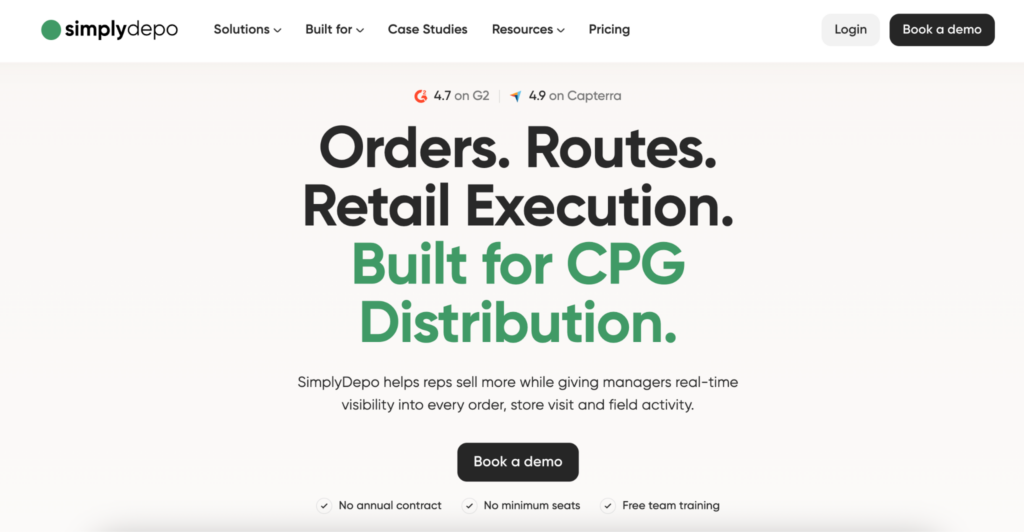
Many distributors don’t actually have a software problem. They have a workflow problem.
A sales representative visits a retailer, writes an order, then another employee schedules deliveries. Drivers use different software to invoice customers. Merchandisers complete shelf audits inside another application. By the end of the day, the same customer visit has produced data across three or four systems.
SimplyDepo was built around a different idea: keep the entire direct store delivery cycle inside one mobile application.
The same field representative who captures today’s order can plan tomorrow’s route, complete a van sale, generate an invoice from the truck, collect payment, upload proof of delivery, and synchronize everything with QuickBooks Online. If the visit also includes merchandising, they can photograph shelves, check planogram compliance, complete retail audits, and document in-store promotions before leaving the location. Nothing has to be re-entered later.
That approach makes the platform especially appealing to self-distributing consumer goods brands that don’t want separate software for sales, deliveries, and retail execution.
Looking beyond the overall workflow, several capabilities stand out.
Key features include:
- Mobile field sales and order capture
- Route planning and route optimization
- Van sales management
- Mobile invoicing
- Digital proof of delivery
- Stripe payment collection
- Branded B2B ordering portal
- Shelf audits and retail execution
- Planogram compliance tracking
- Photo reporting
- Offline operation
- Native two-way QuickBooks Online synchronization
Individually, many of those features aren’t unique. Plenty of DSD vendors offer mobile invoicing. Others provide route optimization or retailer ordering portals. The difference is that SimplyDepo combines these functions inside one workflow instead of requiring several connected products.
That can make a noticeable difference for growing distributors. Less switching between applications usually means fewer manual errors, fewer duplicate records, and considerably less administrative work after drivers return from their routes.
Like every DSD platform, SimplyDepo also has boundaries. Its strongest market is self-distributing brands and wholesale distributors operating in the United States and Canada.
Businesses needing deep native integrations with systems such as SAP Business One or NetSuite may require additional integration work through APIs or middleware. Likewise, distributors handling variable-weight products such as fresh seafood or meat should evaluate software built specifically for catch-weight operations.
Who Should Still Choose SimplyDepo
SimplyDepo makes the most sense for companies that want to simplify day-to-day operations rather than assemble several specialized tools. Food and beverage distributors, specialty CPG brands, beverage producers, supplement companies, pet product suppliers, and other businesses running field sales alongside deliveries are likely to benefit the most from its all-in-one approach.
2. Pepperi
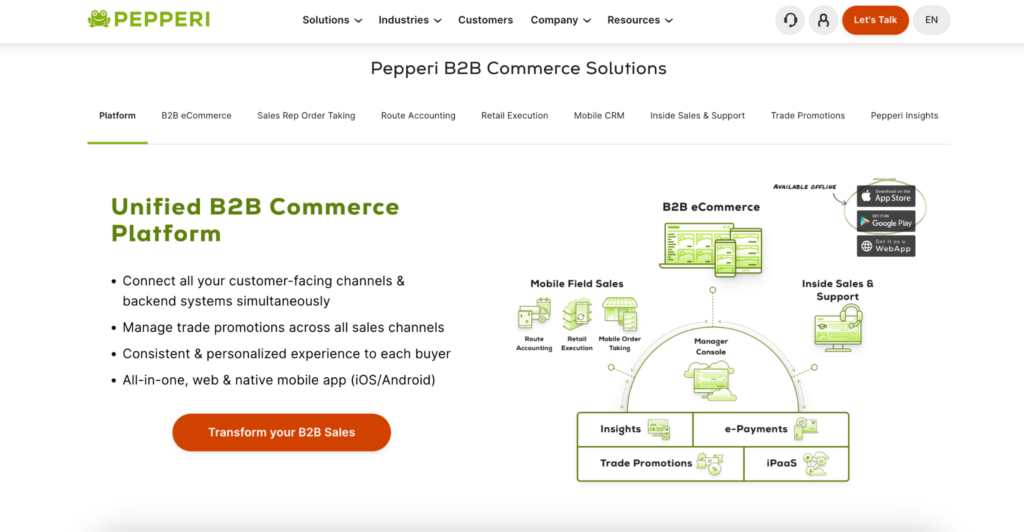
Some software is designed to help a distributor get up and running quickly. Pepperi aims at a different market entirely.
It’s built for organizations with large sales teams, multiple business units, complex pricing structures, international operations, and established ERP environments. If a distributor already relies on SAP, Oracle, Microsoft Dynamics, or NetSuite, Pepperi often enters the conversation because of the depth of its enterprise integrations and customization options.
That enterprise focus shapes almost every part of the platform. Instead of offering a fixed workflow, Pepperi allows businesses to configure sales processes, approval chains, retail execution activities, catalogs, promotions, customer portals, and field operations around their existing structure.
For large organizations, that flexibility is valuable. For smaller distributors, it can feel like buying far more software than they actually need. Its functionality extends well beyond direct store delivery.
Among Pepperi’s strongest capabilities are:
- Enterprise DSD workflows
- Mobile field sales
- Retail execution
- Route accounting
- Customer-specific pricing
- B2B commerce portal
- Extensive ERP integrations
- Workflow customization
- Multi-language support
- Multi-country deployments
The platform has earned a strong reputation among enterprise distributors because it scales well as organizations expand into new markets or manage increasingly complex sales operations. Businesses with hundreds of field users often value configurability more than simplicity. The trade-off is implementation.
Pepperi projects generally require considerably more planning than lightweight SaaS platforms. Configuration, integrations, data migration, and process design all add time before users begin working inside the system. Reviews on G2 also mention that new administrators often face a noticeable learning curve due to the platform’s depth.
Who Should Still Choose Pepperi
Pepperi remains an excellent option for enterprise distributors managing large international sales teams, sophisticated pricing models, or complex ERP environments. Companies already invested in systems like SAP or Oracle may find Pepperi’s flexibility outweighs the longer implementation timeline.
3. bMobile Route
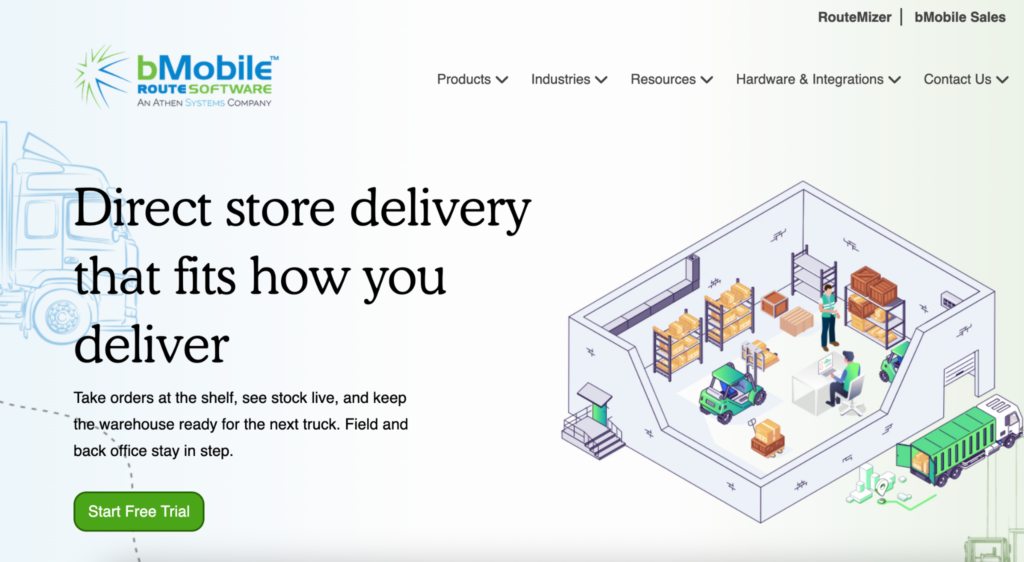
Some software vendors try to cover every corner of distribution. bMobile has taken a different path. For years, its primary focus has been route accounting and direct store delivery for food, beverage, and bakery distributors, which gives the platform a practical feel. Many of its workflows reflect the realities of companies making dozens, or hundreds, of store deliveries every day.
The software combines truck inventory management, customer deliveries, route accounting, mobile invoicing, and warehouse operations into a single environment. Businesses that have been running DSD operations for years often appreciate that the platform doesn’t try to reinvent familiar processes. Instead, it builds on them.
Its feature set is centered around operational efficiency rather than expanding into broader sales or merchandising functions.
Core capabilities include:
- Route accounting
- Truck inventory management
- Mobile invoicing
- Delivery scheduling
- Customer account management
- Warehouse integration
- ERP and accounting integrations
- Reporting and operational analytics
Those strengths make bMobile an attractive choice for distributors whose biggest challenge is managing inventory, deliveries, and financial transactions across multiple routes. It places less emphasis on customer-facing experiences like B2B ordering or retail execution, but many businesses don’t need those capabilities in the first place.
There are a few trade-offs worth considering. Pricing is available through custom quotations, and implementation generally requires planning because of the platform’s operational depth. Companies looking for built-in shelf audits, photo reporting, or merchandising workflows will likely need additional software alongside bMobile.
Who Should Still Choose bMobile
Distributors specializing in packaged food, beverages, bakery products, and similar wholesale operations should give bMobile serious consideration, especially if route accounting is the heart of their business.
4. LaceUp Solutions
Some distribution businesses have requirements that immediately eliminate half the software on the market.
Supplying large grocery chains is one example. DEX invoicing, complex route accounting, multiple ERP environments, and bilingual field teams aren’t universal needs, but they’re critical for certain distributors. LaceUp Solutions has built much of its reputation around supporting exactly those scenarios.
The platform combines mobile sales, delivery management, truck inventory, route accounting, and compliance-focused functionality developed for wholesale distribution. Businesses working with major retail chains often cite its support for DEX transactions as one of the biggest reasons to shortlist it.
Looking deeper into the platform, several areas stand out.
Key features include:
- Route accounting
- Mobile invoicing
- Truck inventory control
- DEX invoicing support
- Delivery management
- Multi-ERP integrations
- Spanish-language support
- Customer pricing management
LaceUp feels like software built by people who understand traditional distribution. It doesn’t necessarily chase every modern SaaS trend, but it solves operational problems that many newer products don’t even attempt to address.
The interface may feel dated compared to newer cloud-first platforms, and businesses looking for integrated retail execution, shelf audits, or merchandising tools will probably need additional software. Still, for distributors serving chain retailers with strict compliance requirements, those limitations are often secondary.
Who Should Still Choose LaceUp Solutions
LaceUp remains one of the stronger options for distributors requiring DEX invoicing, multi-ERP support, or specialized route accounting workflows tied to large retail customers.
5. Orders in Seconds (OIS)
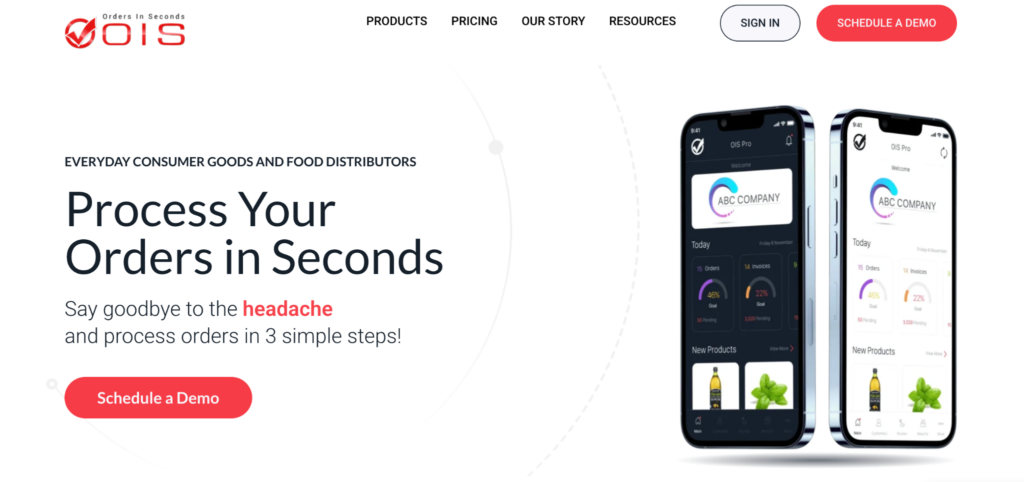
Orders in Seconds has built a loyal customer base by focusing on one thing exceptionally well: helping field sales teams capture orders quickly and accurately.
Instead of trying to become a massive enterprise platform, OIS concentrates on making life easier for sales representatives who spend their day visiting customers. The software supports pre-sales, direct store delivery, customer management, mobile ordering, and QuickBooks integration, making it particularly attractive to distributors already invested in the QuickBooks ecosystem.
One detail worth mentioning is its support for both QuickBooks Online and QuickBooks Desktop, something that still matters for many established distributors.
The platform includes:
- Mobile order capture
- DSD workflows
- Customer visit management
- Route planning
- Digital catalog management
- QuickBooks Online integration
- QuickBooks Desktop integration
- Offline functionality
Its narrower scope is both a strength and a limitation. Teams focused primarily on selling and order capture will likely appreciate the straightforward experience. Businesses wanting retail execution, shelf compliance, merchandising audits, or customer self-service portals may eventually outgrow the platform.
Who Should Still Choose Orders in Seconds
Companies running QuickBooks Desktop or those looking for a dedicated mobile sales solution without the complexity of larger enterprise platforms should keep Orders in Seconds on their evaluation list.
6. inSitu Sales
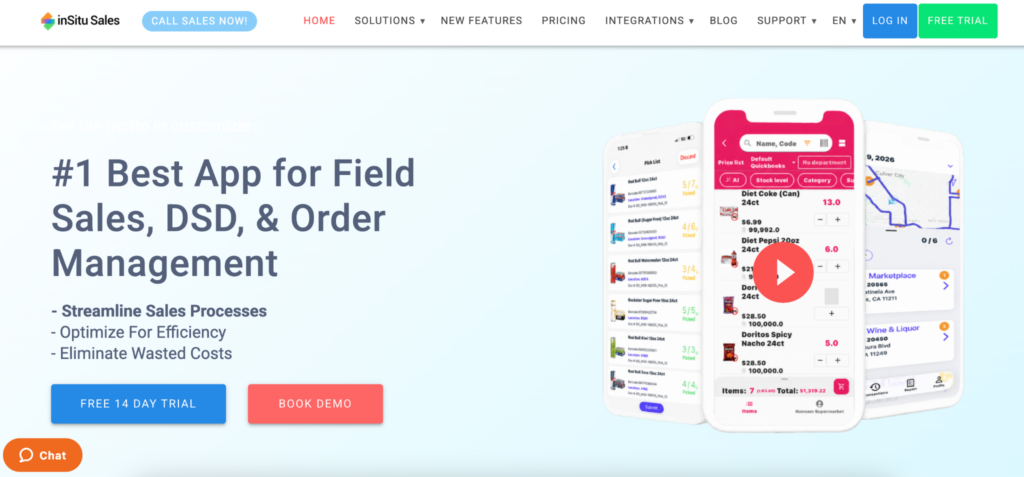
Not every distributor wants separate software for warehouse operations, dispatching, deliveries, and field sales.
inSitu Sales attempts to bring those pieces together under one system. Alongside mobile sales functionality, it includes warehouse management, dispatch coordination, inventory tracking, and delivery tools, giving distributors a broader operational platform than many field sales applications provide.
The software also supports English and Spanish, which is valuable for organizations managing multilingual teams.
Its primary capabilities include:
- Mobile field sales
- DSD operations
- Warehouse management
- Dispatch management
- Inventory tracking
- Delivery management
- Route scheduling
- Multi-language support
The broader operational scope makes inSitu Sales appealing for distributors that manage their own warehouse alongside deliveries. At the same time, merchandising functions such as shelf audits, planogram compliance, or retail execution reporting aren’t central parts of the platform.
Who Should Still Choose inSitu Sales
Growing distributors that want warehouse management and dispatch functionality alongside field sales may find inSitu Sales offers a practical balance without moving into enterprise-level complexity.
7. RouteStar Solutions
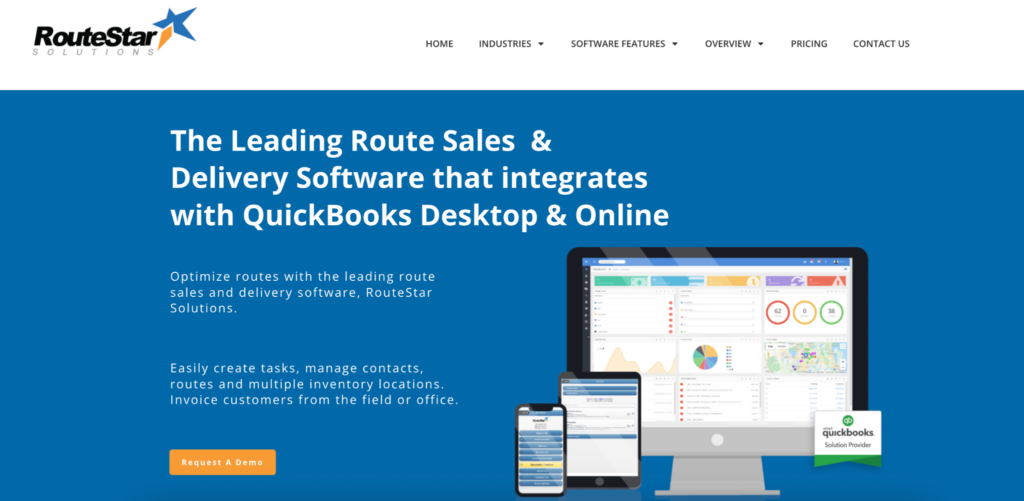
QuickBooks users often look for software that fits naturally into their existing accounting workflow instead of replacing it. That’s where RouteStar Solutions has built its niche.
Designed around route accounting and delivery operations, the platform provides truck inventory management, customer deliveries, invoicing, route planning, and customer portals while maintaining deep QuickBooks connectivity.
Notable features include:
- Route accounting
- Truck inventory management
- Customer portal
- Route mapping
- Mobile invoicing
- Delivery tracking
- Two-way QuickBooks synchronization
Its specialization makes it attractive for distributors already committed to QuickBooks. Businesses looking for broader retail execution capabilities or integrated merchandising workflows, though, may find the platform somewhat limited compared to newer all-in-one systems.
Who Should Still Choose RouteStar Solutions
Distributors whose primary priority is reliable QuickBooks-based route accounting rather than retail execution or field merchandising should consider RouteStar Solutions.
8. Orderwerks
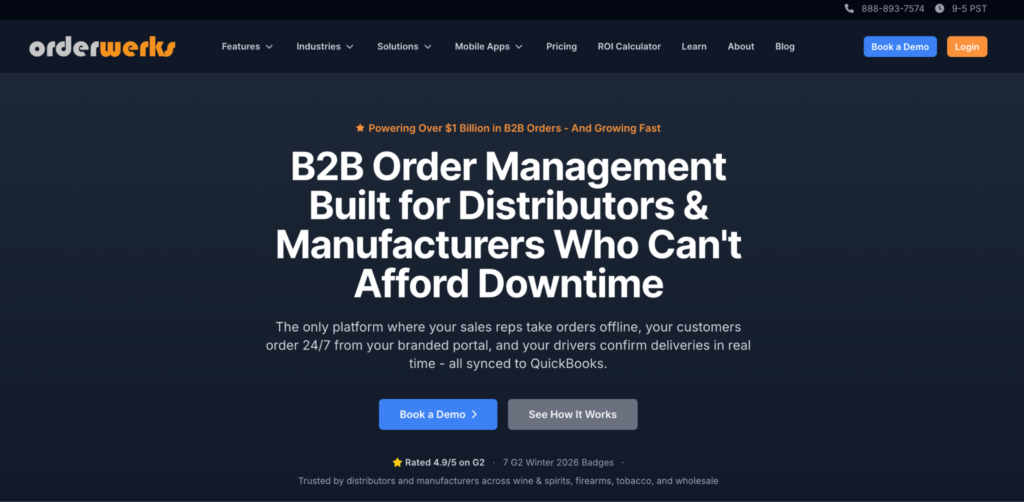
Orderwerks approaches wholesale distribution from a slightly different angle. The platform combines B2B ordering with mobile sales and DSD capabilities, while also supporting several specialized industries that many competitors don’t actively target. Businesses operating in alcohol distribution, firearms, or tobacco often evaluate Orderwerks because of features designed around those regulated markets.
Its mobile applications support field representatives and delivery teams, while customer ordering can happen through a branded online portal.
Key functionality includes:
- B2B ordering portal
- Mobile field sales
- DSD route management
- Customer pricing
- QuickBooks integration
- Multi-accounting support
- Offline mobile application
The software stands out for distributors working in regulated industries where compliance is a major operational concern. Companies outside those verticals may find they don’t need some of its specialized functionality.
Who Should Still Choose Orderwerks
Businesses distributing alcohol, tobacco, firearms, or products with industry-specific compliance requirements should keep Orderwerks on their shortlist.
Finding the Right Operational Fit
No distributor runs exactly the same operation, which is why no single platform fits every business.
For self-distributing brands looking to manage field sales, deliveries, retailer ordering, and retail execution from one mobile application, SimplyDepo offers one of the most complete workflows available.
Enterprise organizations with global ERP environments may lean toward Pepperi, while distributors with specialized compliance requirements or industry-specific needs may find stronger alignment with platforms like LaceUp Solutions or Orderwerks.
The best decision comes from mapping software capabilities to your daily operations, not choosing the platform with the longest feature list.