
For years, application security and cloud security followed different paths. Different teams. Different dashboards. Different priorities.
Application security focused on code, dependencies, and software development risks. Cloud security focused on infrastructure, workloads, identities, and misconfigurations.
The separation seemed logical. Until organizations started discovering that attackers did not care about those categories.
A vulnerable dependency inside an application can become dangerous because of a cloud exposure. A cloud misconfiguration can expose an application that would otherwise be difficult to reach. A compromised workload can create access to resources far beyond the original point of entry.
The attack path connects everything. Security tooling has been slower to catch up. Many organizations still operate separate AppSec and cloud security programs even though the risks increasingly overlap. This is one reason a growing number of teams are looking for platforms that bridge both worlds.
Interestingly, many companies evaluating Snyk alternatives eventually arrive at this exact challenge. They begin by comparing application security tools and end up realizing they need visibility that extends into cloud environments as well.
The platforms below are among the strongest options for organizations looking to bring application and cloud security closer together.
Why AppSec and Cloud Security Are Converging
The boundaries have become harder to maintain. Modern applications are deeply connected to cloud infrastructure. Development teams deploy dozens or hundreds of times each day. Infrastructure changes continuously. New services appear. Existing services disappear.
Security teams can no longer evaluate code and infrastructure independently. A vulnerability scanner may identify a critical issue.
That information alone does not reveal whether the affected application is exposed to the internet, whether sensitive assets are involved, or whether exploitation would actually create meaningful business risk.
Cloud context helps answer those questions. This is why security leaders increasingly want platforms capable of combining both perspectives.
What To Look For
Not every platform approaches convergence the same way. Some vendors begin with application security and expand into cloud visibility. Others start with cloud security and gradually move toward software risk management.
Organizations evaluating platforms in this category often look for:
- Application security testing
- Cloud security visibility
- Vulnerability management
- Risk prioritization
- Asset inventory
- Secrets detection
- Container security
- Remediation workflows
The best choice of a Snyk alternative depends on whether the organization’s primary challenge originates in code, cloud infrastructure, or both.
1. Aikido
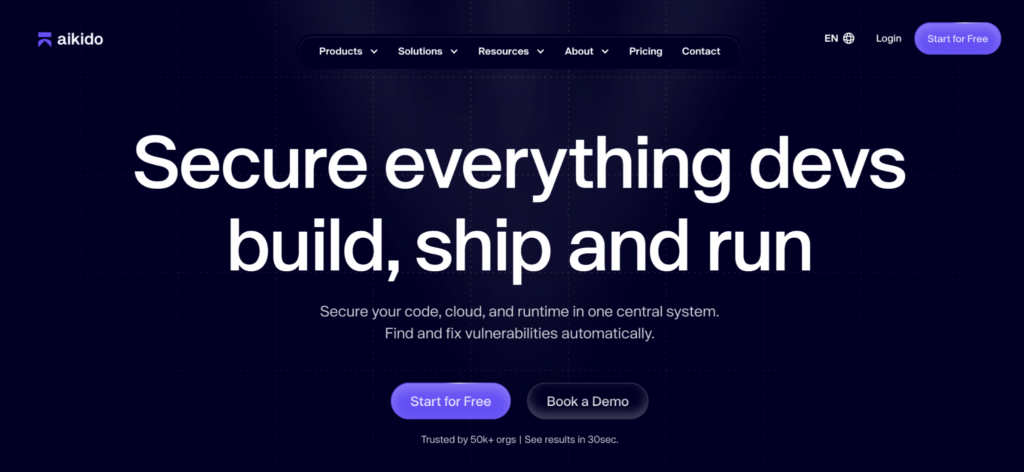
Many security platforms focus heavily on one side of the equation. Aikido is designed to cover both.
The platform combines application security, cloud security, vulnerability management, runtime protection, secrets detection, container security, supply chain security, AI-powered pentesting, malware scanning, and remediation workflows within a single environment. Instead of treating AppSec and cloud security as separate disciplines, findings are correlated to provide a broader understanding of risk.
This approach helps security teams understand how vulnerabilities, cloud exposures, infrastructure risks, and runtime findings relate to one another.
Capabilities include:
- SAST
- SCA
- Cloud security
- Secrets scanning
- IaC security
- Container security
- Runtime protection
- AI pentesting
- Vulnerability management
- AutoFix remediation
For organizations seeking a unified platform rather than separate AppSec and cloud security products, Aikido is often one of the most compelling options.
2. Wiz
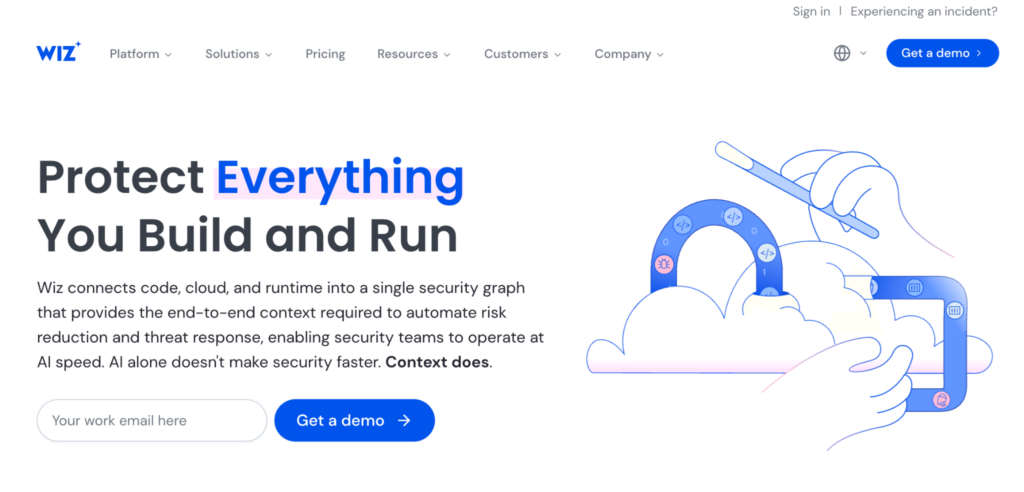
Wiz became one of the most influential cloud security platforms by helping organizations understand relationships across cloud environments. Over time, those relationships increasingly included application-layer risks.
A cloud exposure rarely exists in isolation. Applications, workloads, identities, containers, and infrastructure are often connected through complex attack paths. Wiz focuses heavily on helping organizations visualize those relationships and prioritize remediation accordingly.
Capabilities commonly include:
- Cloud security posture management
- Container security
- Workload security
- Identity security
- Exposure management
- Vulnerability visibility
For cloud-first organizations, Wiz remains one of the most widely evaluated platforms on the market.
3. Prisma Cloud
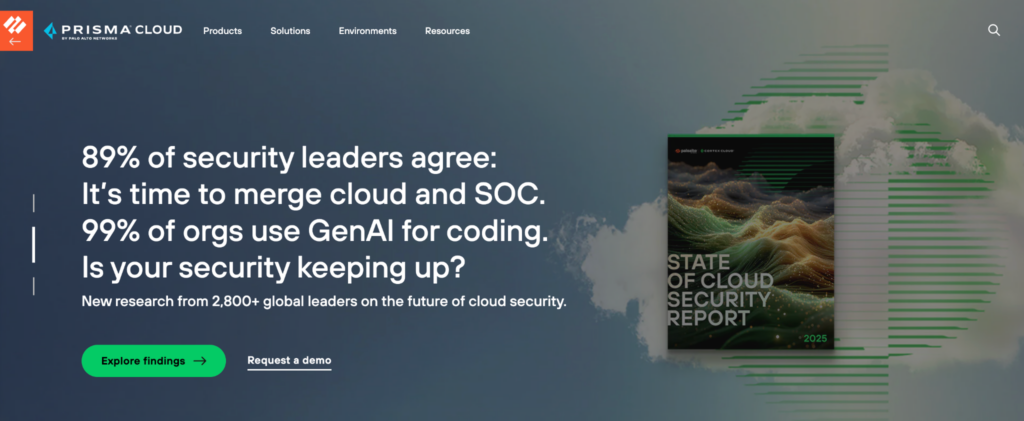
Many enterprises prefer comprehensive security platforms that cover multiple cloud-native environments from a single vendor.
Prisma Cloud was built around that concept. The platform combines cloud security posture management, workload protection, infrastructure visibility, application security capabilities, and risk management functions designed for large cloud environments.
Capabilities include:
- CSPM
- Cloud workload protection
- IaC security
- Container security
- Identity security
- Vulnerability management
Organizations operating at enterprise scale frequently include Prisma Cloud in evaluations.
4. Checkmarx One
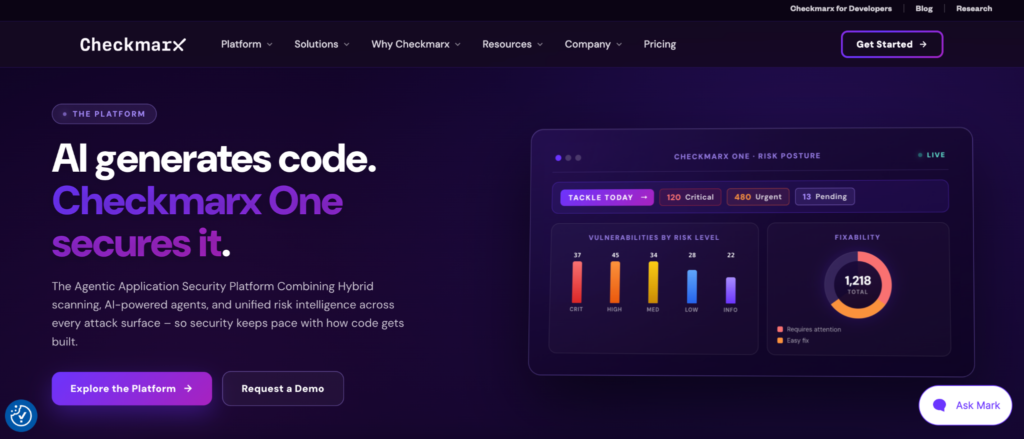
Checkmarx built much of its reputation through application security testing. The market has gradually pushed vendors toward broader coverage.
Today, organizations increasingly expect security platforms to provide visibility beyond code analysis alone. Development risks, cloud exposures, infrastructure security, and application risk management are becoming part of the same conversation.
Checkmarx One reflects that evolution.
Capabilities include:
- SAST
- SCA
- API security
- IaC scanning
- Container security
- Supply chain security
- Application risk visibility
For organizations approaching the problem from an AppSec-first perspective, Checkmarx remains a strong contender.
5. Microsoft Defender for Cloud
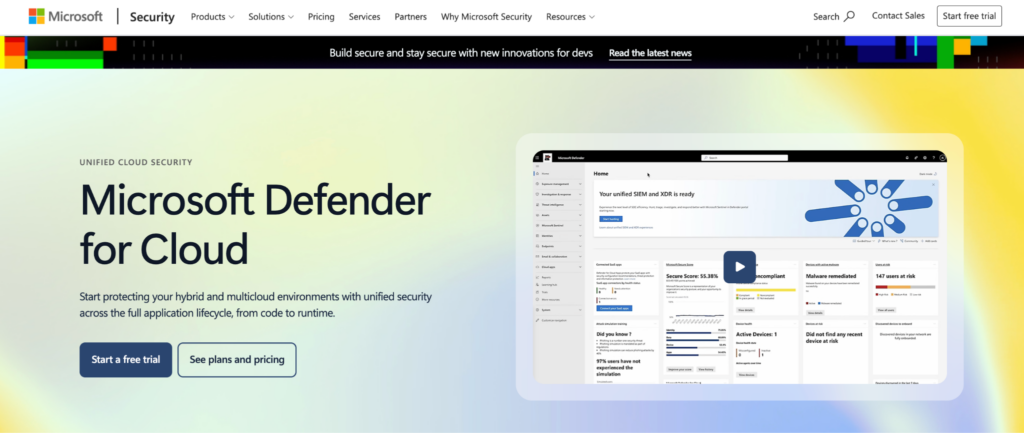
Microsoft occupies a unique position within the security market. Many organizations already rely heavily on Azure, Microsoft 365, GitHub, and related services. As a result, security teams often evaluate Defender for Cloud as part of a broader ecosystem strategy rather than as a standalone product decision.
The platform combines cloud security capabilities with application visibility, workload protection, vulnerability management, and compliance reporting.
Capabilities include:
- Cloud security posture management
- Workload protection
- Vulnerability assessment
- Container security
- Threat detection
- Compliance reporting
For organizations already invested in Microsoft’s ecosystem, Defender for Cloud can provide extensive coverage without introducing another major vendor relationship.
Security Teams Are Starting To Follow Attack Paths
Traditional security programs often focused on categories. Modern security programs increasingly focus on relationships.
A cloud exposure may increase the importance of a vulnerability. A runtime event may reveal active exploitation. An application weakness may become much more significant because of the infrastructure surrounding it.
The connection between these risks matters as much as the risks themselves. Platforms that combine application and cloud security are gaining attention because they help teams understand those relationships more clearly.
Why Separate Dashboards Create Blind Spots
Most organizations already have security data. The challenge is that the data often lives in different places.
Application findings sit inside AppSec tools. Cloud risks sit inside CSPM platforms. Runtime events appear elsewhere. Teams spend valuable time moving between systems trying to understand how everything fits together.
The result is not necessarily poor visibility. The result is fragmented visibility. Platforms that connect these domains attempt to reduce that fragmentation by creating a shared view of risk.
Choosing the Right Platform
Organizations approach this category from different starting points. Some begin with application security and want stronger cloud visibility. Others begin with cloud security and want a greater understanding of software risk. Some are trying to consolidate tools. Others simply want better prioritization.
For teams researching Snyk alternatives, this broader category is becoming increasingly relevant. Modern security challenges rarely stop at the application layer, and security platforms are evolving accordingly.
Solutions such as Aikido, Wiz, Prisma Cloud, Checkmarx One, and Microsoft Defender for Cloud each approach the problem differently, but all reflect the same trend: application security and cloud security are no longer separate conversations.