
Software projects often begin with a technology problem and end with a process problem. A company implements Salesforce to improve customer management. Oracle is introduced to support finance and operations. NetSuite becomes the system connecting different business functions.
The systems work. The challenge appears somewhere in between them. Sales enters information one way. Finance follows a different procedure. Operations creates its own shortcuts. A process that looked perfectly clear during implementation slowly starts drifting as departments adapt it to their daily routines.
Nobody notices immediately. Months later, managers begin asking why reports do not match. Support teams spend time correcting mistakes. New employees receive different instructions depending on who trains them.
At that point, the issue is no longer software adoption. It is process consistency. Organizations that run multiple enterprise systems eventually discover that standardization requires more than documentation. People need clear guidance, accessible knowledge, and enough context to understand how work should be completed regardless of department.
That challenge has created an entire category of tools designed to support process consistency across complex software environments.
Different Ways Organizations Approach Standardization
Not every company tries to solve process drift the same way. Some invest heavily in documentation. Others focus on workflow guidance directly inside applications. Some prioritize analytics to identify where users struggle. Others concentrate on making operational knowledge easier to access.
The platforms below represent several different approaches.
| Platform | Primary Focus | Often Used For |
| Tango | Process guidance and workflow documentation | Cross-system standardization |
| WalkMe | Enterprise digital adoption | Large transformation initiatives |
| Whatfix | In-app workflow support | Enterprise software adoption |
| Spekit | Embedded operational knowledge | CRM and operations teams |
| Guidde | Visual process documentation | Process sharing and onboarding |
| Stonly | Interactive decision-based guidance | Variable workflows |
| Pendo | Adoption analytics and user behavior insights | Process optimization initiatives |
1. Tango
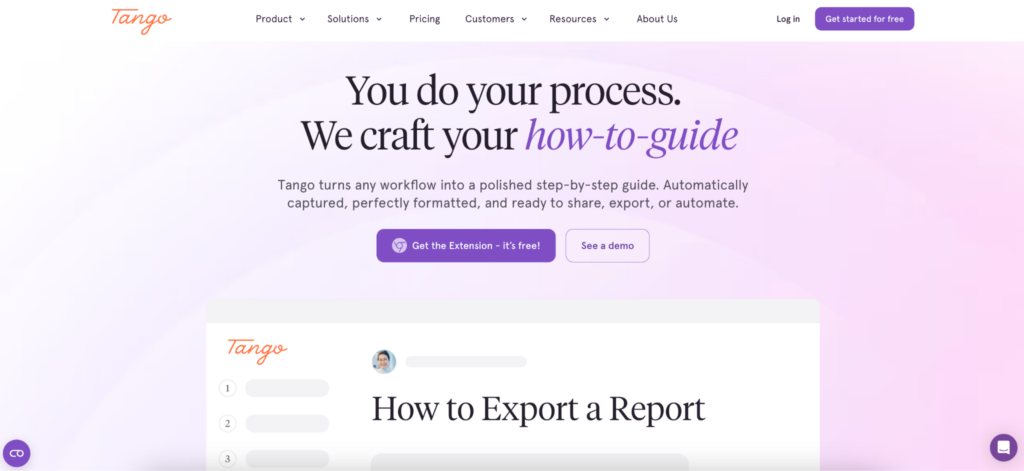
Most organizations already have documented processes. The problem is that nobody can find them when they need them.
A workflow lives in Confluence. An approval guide exists in a PDF. A department maintains its own instructions inside a shared folder. Employees spend more time looking for information than applying it.
That fragmentation becomes more noticeable when Salesforce, Oracle, and NetSuite are all involved. People move between systems throughout the day. Context changes. Processes overlap.
Tango was built around helping organizations make workflow knowledge easier to capture and easier to use.
Teams can create process guides while completing tasks, producing structured documentation with screenshots and instructions that can be shared across departments.
Capabilities include:
- Workflow documentation
- Process guides with screenshots
- Embedded process assistance
- Branching logic for complex workflows
- Adoption analytics
- Support across multiple business systems
One advantage is that the platform does not depend on a single application environment. Teams can document processes across Salesforce, Oracle, NetSuite, and other systems using the same approach.
For organizations trying to reduce variation between departments, that flexibility can be valuable.
2. WalkMe
Some companies approach standardization at a much larger scale. The objective is not simply documenting processes. The objective is to create consistent user behavior across thousands of employees and multiple business units.
WalkMe is often associated with these types of initiatives. The platform delivers guidance inside applications while helping organizations monitor adoption and manage large digital transformation programs.
Common capabilities include:
- In-app guidance
- Workflow automation
- Enterprise governance
- User analytics
- Adoption programs
For organizations running broad operational transformation efforts, WalkMe is frequently part of the conversation.
3. Whatfix
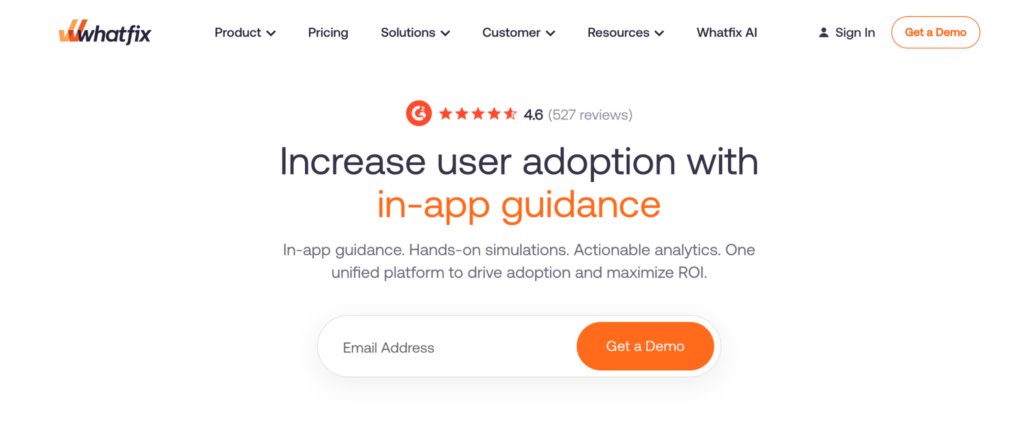
A process guide is only useful if people actually use it. That simple reality explains why many organizations look beyond documentation and toward embedded guidance.
Whatfix focuses on helping users complete tasks while they are working inside enterprise applications.
Instead of asking employees to leave Salesforce, Oracle, or NetSuite to search for instructions elsewhere, guidance can be delivered directly within the workflow.
This approach tends to appeal to organizations where process accuracy is critical and mistakes can create downstream operational issues.
Typical use cases include:
- Guided workflows
- Process standardization
- Employee enablement
- Enterprise software adoption
- Change management
For teams trying to improve consistency across departments, reducing the distance between work and guidance can have a meaningful impact.
4. Spekit
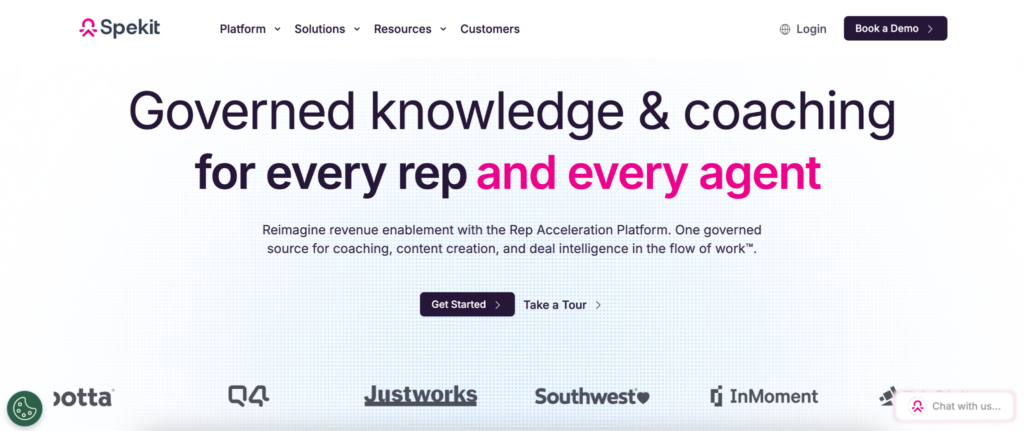
Many process issues begin as knowledge issues. The right information exists somewhere. Employees simply do not encounter it at the right moment. Spekit focuses on bringing process knowledge closer to daily work.
Rather than relying on employees to search documentation repositories, the platform surfaces guidance within the tools they already use.
This has made it particularly popular among:
- Revenue operations teams
- Sales organizations
- Customer-facing departments
- CRM-heavy environments
For organizations attempting to create more consistent execution without overwhelming users with documentation, that model can be attractive.
5. Guidde
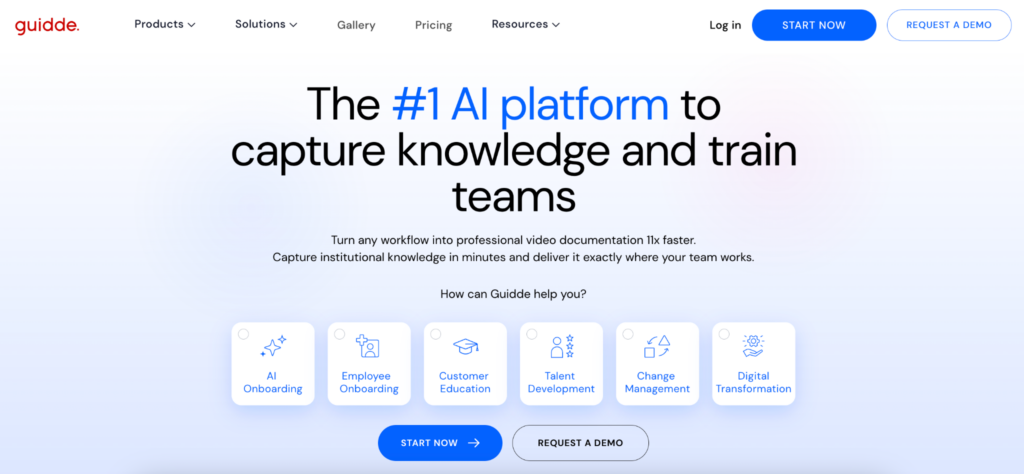
Not every standardization effort requires a large platform rollout. Sometimes the biggest obstacle is creating documentation quickly enough to keep up with process changes.
Guidde focuses on visual process documentation and operational guides that can be shared across teams. Organizations often use it during periods of change when workflows are evolving, and employees need practical instructions more than formal training programs.
The appeal is straightforward. Teams can create guides quickly. Users can follow them easily. In fast-moving environments, that simplicity can matter.
6. Stonly
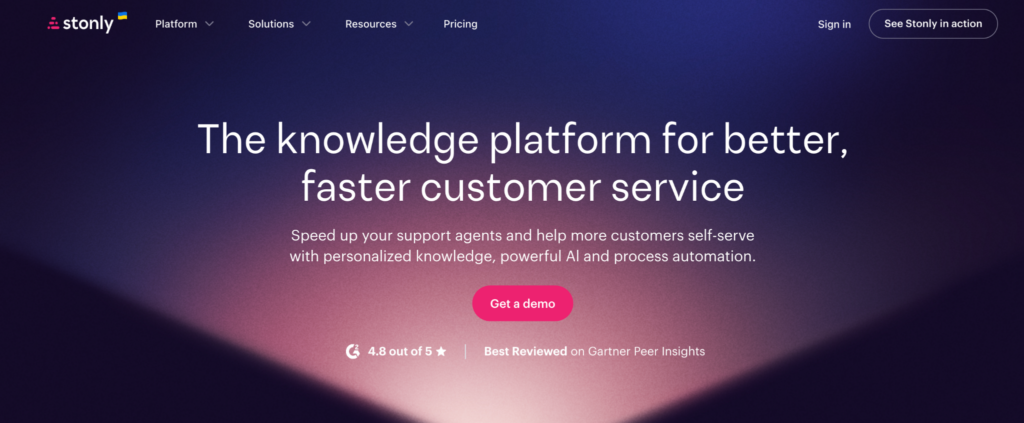
One reason standardization is difficult is that not every process follows a straight line. Different customers require different actions. Approval paths change. Business rules introduce exceptions.
Static documentation can become difficult to manage under those conditions. Stonly approaches the problem through interactive guidance that adapts based on user choices.
Capabilities include:
- Interactive workflows
- Decision trees
- Knowledge delivery
- Process support
- Self-service experiences
For organizations managing more complex operational processes, interactive guidance can help employees follow the correct path without needing extensive training.
7. Pendo
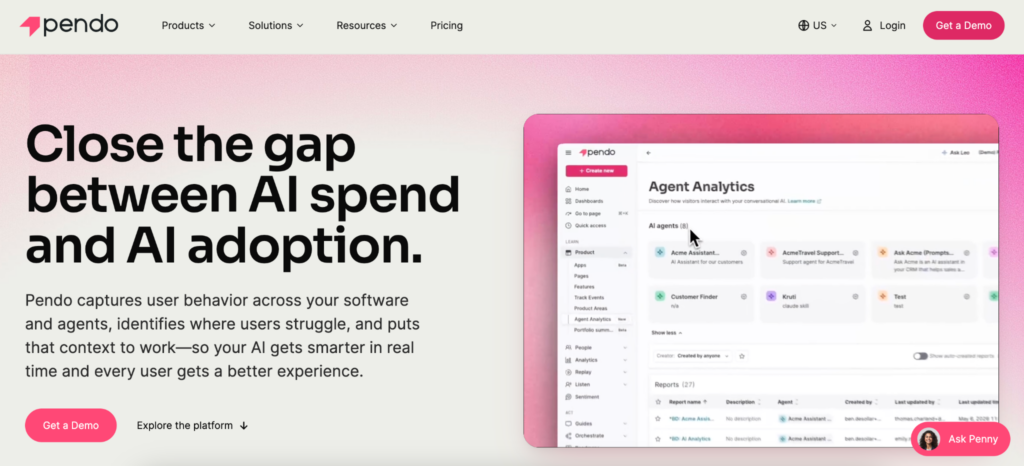
Process consistency is difficult to improve when organizations do not know where problems exist. Pendo focuses on answering that question.
The platform combines adoption capabilities with analytics, helping organizations understand how employees interact with software and where workflows begin to break down.
Questions it often helps answer include:
- Which processes are being completed successfully?
- Where do users abandon workflows?
- Which features are underutilized?
- Which teams need additional support?
For organizations taking a data-driven approach to standardization, those insights can be valuable.
Process Drift Happens Quietly
Few organizations decide to abandon their processes. Most drift away from them gradually.
A shortcut saves time. A workaround becomes routine. A team develops its own interpretation of a workflow. Months later, the organization discovers that departments are operating differently despite using the same systems.
That pattern is remarkably common across Salesforce, Oracle, and NetSuite environments. The challenge is rarely defining the correct process. The challenge is keeping everyone aligned once implementation teams leave and daily operations take over.
Consistency Is What Scales
Growth tends to expose process gaps faster than almost anything else. What works for a team of twenty becomes difficult to manage across two hundred. Knowledge that once spread through informal conversations becomes harder to maintain. Training sessions become less effective as organizations expand.
The platforms above address that challenge from different directions. Some focus on documentation. Others emphasize guidance, analytics, or knowledge delivery.
The shared objective is simple: helping people complete work the same way, regardless of department, location, or system.
Because once Salesforce, Oracle, and NetSuite are in place, consistency often becomes the next major competitive advantage.